FindAllNews.lkbeta

Wednesday 11 November 2026Wed 11 Nov 2026

Results for “cbsl”

CBSL Governor tells Parliament structural reforms are needed to boost economic growth

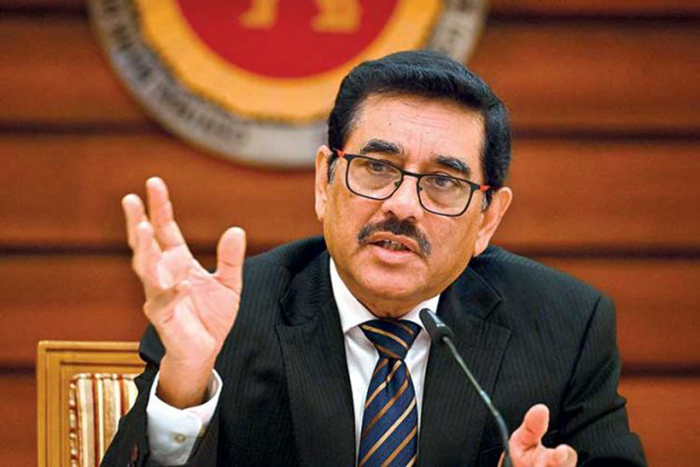
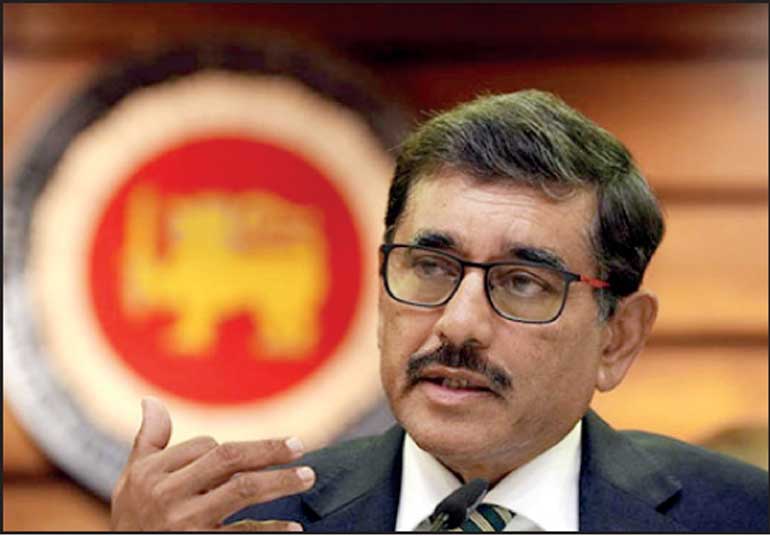
Central Bank Governor Dr. Nandalal Weerasinghe told the Committee on Public Finance that expanding Sri Lanka’s growth potential depends on Parliament passing structural reforms, rather than on monetary policy. Dr. Weerasinghe said the Central Bank could help the economy operate near its potential capacity, but could not expand it. He said achieving 6% to 7% growth requires reforms across trade, investment, customs, land markets, and labour. According to Dr. Weerasinghe, the International Monetary Fund estimated Sri Lanka’s potential growth at around 3%, while the Central Bank estimated it at 4% to 5%. Committee Chairman and opposition MP Dr. Harsha de Silva welcomed the Government’s reform direction, agreeing that the need for structural change should transcend party politics.
Central bank governor says Parliament, not CBSL, must raise GDP growth potential

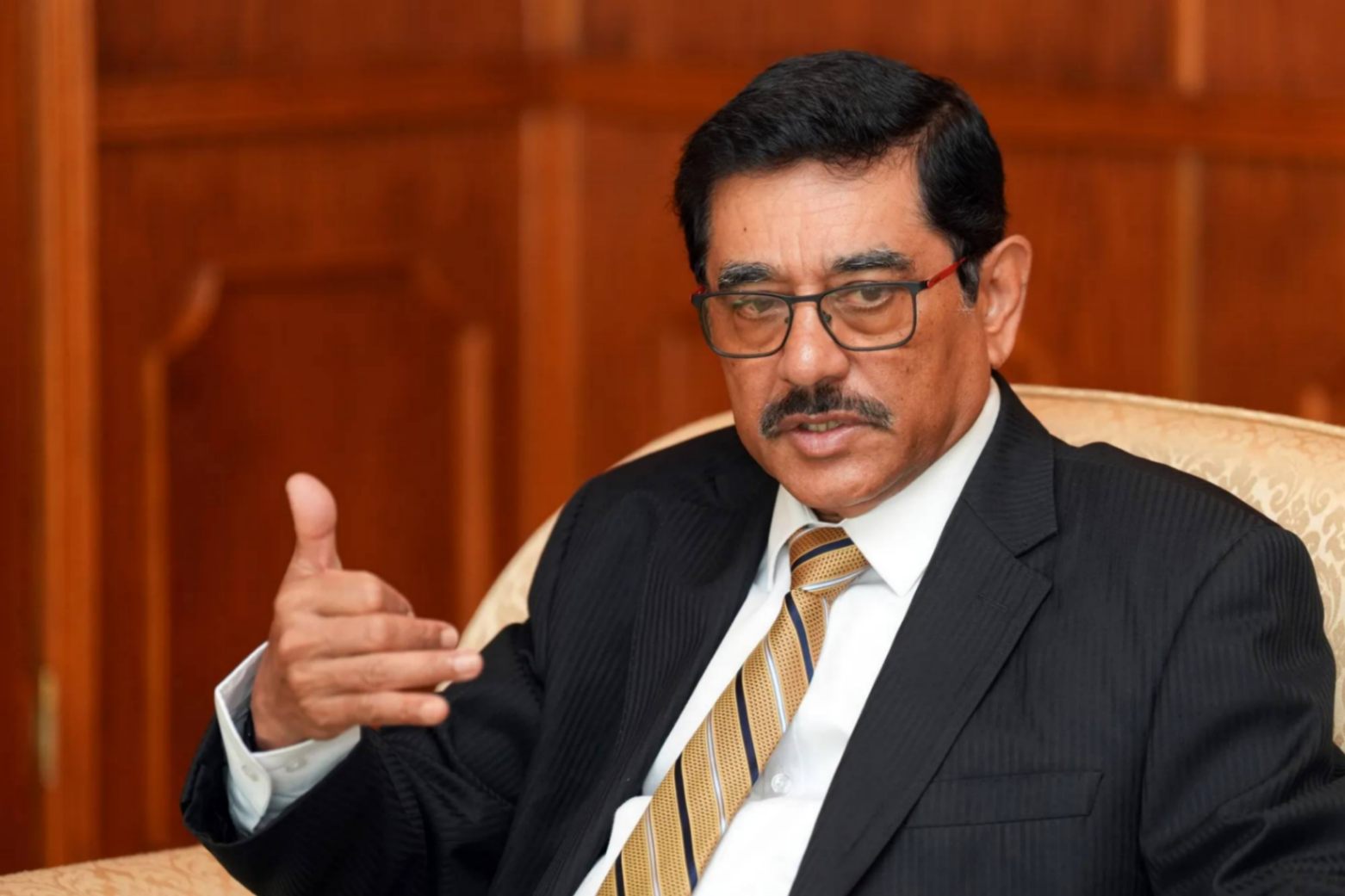
Speaking to the Committee on Public Finance on 5 November, Central Bank of Sri Lanka Governor Dr Nandalal Weerasinghe said increasing the country’s GDP growth potential rests with Parliament, not the central bank. Dr Weerasinghe explained the central bank uses monetary policy only to keep growth near its potential, which has averaged 4.4% from 1977 to the present. He stated that lifting potential growth to 6–7% requires legislative reforms in trade, investment, customs, land, labour, and the ease of doing business. The central bank projects 2026 real GDP growth at 4–5%, while the International Monetary Fund forecasts 4.0%, down from 5.0% in 2025.

Sri Lanka sees no urgency to re-enter international capital markets, CBSL governor says

Central Bank of Sri Lanka Governor Dr Nandalal Weerasinghe said there is no urgency for the country to access international capital markets, describing re-entry as a market-driven process rather than one bound to a timeline. Speaking to Global Finance Magazine, Weerasinghe stated that faster-than-expected fiscal consolidation under the International Monetary Fund's Extended Fund Facility and progress in debt restructuring have strengthened investor confidence. In September, IMF Mission Chief Evan Papageorgiou said Sri Lanka was on track to regain market access around 2027, following a 2023 IMF projection to raise $1.5 billion through International Sovereign Bonds that year. Weerasinghe noted that any future return would depend on several factors, including global market conditions.

CBSL warns of real estate risks as bank exposure approaches Rs. 2 trillion

The Central Bank of Sri Lanka warned that rising property prices and growing banking sector exposure warrant continued monitoring, noting that a sharp price correction could spill over into the financial system. In its Financial Stability Review 2026, the bank stated that asking prices for Colombo District land, houses, and condominiums reached their highest levels since 2019, driven by economic recovery, elevated construction costs, and sustained demand. Banking sector exposure to real estate approached Rs. 2 trillion by end-June 2026, comprising 13.7% of total loans. Residential activities accounted for more than 80% of this lending, while non-residential lending contracted. Asset quality improved during the credit expansion, with the Stage 3 credit-impaired loan ratio for real estate declining to 10.4% by end-June 2026 from 14% a year earlier.

IMF and CBSL officials urge human oversight and trust in adopting AI

Speaking at the Central Bank of Sri Lanka’s 76th anniversary on 23 October 2026, International Monetary Fund Chief Information Officer Shirin Hamid and CBSL Governor Dr P Nandalal Weerasinghe urged central banks to maintain public trust amid artificial intelligence risks. Hamid warned of threats including autonomous cyberattacks, voice cloning from three seconds of audio, and manipulated internal AI assistants. She noted commercial generative AI misstated GDP figures up to two-thirds of the time, prompting the IMF to build StatGPT. Hamid stressed that all AI must be explainable, governed, secure, ethical, and human-supervised, insisting that named individuals remain answerable for decisions and technology never make final policy calls. Governor Weerasinghe highlighted that public trust underpins financial stability and monetary policy. He noted Sri Lanka’s Computer Emergency Readiness Team received complaints in June over fraudulent AI-impersonation videos promoting investment scams.

CBSL Governor outlines price stability and resilience lessons at RBI conference

Speaking at the Reserve Bank of India’s Samvad Conference on Monday (19), Central Bank of Sri Lanka Governor Dr. P. Nandalal Weerasinghe stressed the importance of institutional credibility, strong monetary policy frameworks, and policy buffers against external shocks. Participating in a panel discussion titled ‘Managing Uncertainties in Challenging Times’, Dr. Weerasinghe drew on Sri Lanka’s recent economic experience to outline how central banks can build resilience amid global shocks. He stated that preserving price stability and long-term economic resilience requires timely, well-calibrated, and coordinated policy responses, supported by exchange rate flexibility, transparent communication, sound macroeconomic policies, and well-anchored inflation expectations.

69% of Sri Lankan banks use AI, but adoption remains low: CBSL survey

A Central Bank of Sri Lanka survey conducted in November 2025 found that 69% of licensed banks have started some form of Artificial Intelligence activity, but usage remains low. No bank reported implementing an AI-first model. 31% of banks have no AI usage or immediate plans. Among the rest, 21% are in exploratory or feasibility phases, 17% are developing pilot projects, and 31% have live applications—10% in limited areas, 17% for multiple functions, and 4% with extensive integration. AI is mainly used for fraud and anti-money laundering monitoring, credit scoring, customer chatbots, document processing, and internal productivity. The Central Bank warns that while AI lowers costs, it also increases the impact of attacks on banks and customers. Key challenges include limited local AI capabilities (17%), cybersecurity risks (15%), high costs (15%), regulatory uncertainty (12%), and legal integration (11%). 62% of banks partner with international tech firms, 24% with local firms, and 21% each use regional fintech and open-source solutions.

CBSL rules out sub-5% inflation target, citing economic recovery risks

The Central Bank of Sri Lanka (CBSL) has ruled out lowering its inflation target below 5%, saying the economy is not ready for such a move. Senior Deputy Governor Dr. Chandranath Amarasekara said a lower goal would force prolonged tight monetary policy on an economy still recovering from crisis and exposed to external shocks. The decision follows the new Monetary Policy Framework Agreement signed on 1 October by President and Finance Minister Anura Kumara Dissanayake and CBSL Governor Dr. Nandalal Weerasinghe. It keeps a 5% quarterly headline inflation target for three years, with a ±2 percentage point accountability margin. Amarasekara spoke at The Ceylon Chamber of Commerce summit, responding to calls from independent economists and former Finance Minister Ravi Karunanayake for a 2% or 2%-3% target. He noted inflation averaged 12% from 1978 to 2009 and 11% until 2023, arguing 5% is ambitious and low by global standards.

Sri Lanka manufacturing and services PMI stay in expansion zone in September

Sri Lanka's manufacturing and services sectors both remained in expansion territory in September, according to the Central Bank of Sri Lanka's Purchasing Managers' Index (PMI). The Manufacturing PMI held steady at 53, unchanged from August, with growth in New Orders and Production driven by the Food and Beverages and Textiles and Wearing Apparel sectors. Employment grew at a slower pace, while stock of purchases moderated and suppliers' delivery time lengthened. The Services PMI fell to 60.5 from 65.6 in August, still indicating expansion. Business activity rose on gains in Financial Services, Education, and Professional Services, while new businesses and employment also increased. CBSL expects both sectors to stay positive over the next three months, citing year-end seasonal demand, favourable macroeconomic conditions, increased tourist arrivals, and the festive season, though global uncertainties remain a risk.

EDB and CBSL seminar briefs electronics makers on forex rules

Sri Lanka Export Development Board (SLEDB) and the Central Bank of Sri Lanka (CBSL) held a seminar on 6 October 2026 at CBSL premises for over 35 senior managers from the electronics and electrical sector. The session covered foreign exchange rules, inward and outward transaction regulations, and forex repatriation rules. EDB Director General Eranadika Dissnayake explained the seminar's objectives; CBSL officials Kapila G. Weerkoon, Nuwan Jayaweera, and Ishadhi Poornima outlined the regulations. The sector is Sri Lanka's fifth-largest merchandise export earner, with $440 million earned in 2025, over 100 companies, and more than 37,000 employees. It is a focus sector under the National Export Development Plan, with a target of $1 billion in exports by 2028.

CBSL reports financial system stable in H1 2026 amid global risks

The Central Bank of Sri Lanka’s Financial Stability Review for 2026 says the financial system remained stable in the first half of 2026, supported by economic recovery, adequate capital and liquidity buffers, and improved fiscal performance. GDP growth reached 4.2% in the second quarter of 2026. Bank lending rose 23.6% year-on-year, while finance company lending grew about 45%, driven by business activity and investment. The rupee depreciated about 5.5% against the US dollar, but the Central Bank made net foreign exchange purchases of USD 1.52 billion to strengthen reserves. The report warns of risks from geopolitical tensions, global inflation, trade fragmentation, and climate-related shocks. It also notes potential domestic vulnerabilities from rapid credit growth, especially in household lending. The review was published under the Central Bank of Sri Lanka Act, No. 16 of 2023.

Worker remittances rise to $6.86 billion in first nine months

Sri Lanka received $6,865.4 million in workers' remittances from January to September this year, according to the Central Bank of Sri Lanka (CBSL). This was an increase of $1,053.7 million compared with the same period last year, when remittances totaled $5,811.7 million. In September alone, remittances amounted to $734.4 million, up from $695.7 million in September last year, reflecting a year-on-year rise.

Vehicle and gold loans reach 24.9% of Sri Lanka bank, finance credit: CBSL

Vehicle and gold-backed loans now account for 24.9% of all credit extended by Sri Lanka's banks and finance companies at end-June 2026, up from 19.6% at end-2024, the Central Bank of Sri Lanka (CBSL) said in its Financial Stability Review 2026. The rise followed the reopening of vehicle imports in early 2025 and record-high gold prices in January 2026. Vehicle-related credit rose to 12.9% of total credit from 9.8%, while gold-backed lending rose to 12% from 9.8%. At finance companies, the concentration is far heavier: vehicle and gold loans together made up 85.2% of their credit, up from 82.6% a year earlier. Vehicle-backed loans grew 46.3% year-on-year and gold-backed loans 59.8%. The CBSL warned that heavy reliance on two collateral types exposes lenders to price falls. Early strain is visible: Stage 2 vehicle-backed loans grew 75.5% and gold-backed loans 279.2% in the year to June 2026. Governor Dr. Nandalal Weerasinghe said household debt remained below its historical average and was not yet a concern.

Over a third of Sri Lankan listed firms fail to cover interest costs: CBSL

More than a third of Sri Lanka's listed non-financial companies failed to earn enough to cover their interest costs in the first half of 2026, the Central Bank said in its Financial Stability Review 2026. The share of firms with an interest coverage ratio below one rose to 37.7% from 33.8% a year earlier, while those able to fully meet interest costs fell to 62.3% from 66.2%. The assessment covered 204 companies listed on the Colombo Stock Exchange as at end-June. Revenue grew 22% year-on-year, led by the automobile sector (up 138.9%) after vehicle import restrictions were relaxed, and the power and energy sector. However, aggregate net profit fell 6.1% to Rs. 137 billion from Rs. 146 billion, reversing 65.2% growth in 1H 2025. Higher costs eroded gains: a Rs. 152 billion rise in cost of sales and a Rs. 52 billion increase in other operating costs offset the Rs. 199 billion revenue boost. The CBSL said the pressure was not broad-based, with median profits still positive and 55.9% of firms increasing profits.

CBSL Governor: Financial literacy key to Sri Lanka's development

Central Bank Governor Dr. Nandalal Weerasinghe said financial literacy is essential for including people in the country's financial system and is central to overall economic development. He noted Sri Lanka's financial literacy rate is approximately 58 percent, stressing that people need financial knowledge and skills to participate effectively in the economy.

CBSL official: fiscal policy, not monetary policy, should shield inflation-hit groups

Central Bank of Sri Lanka (CBSL) Assistant Governor Dr. P.K.G. Harischandra said fiscal policy and social safety nets, not monetary policy, are the right tools to protect groups hardest hit by inflation. Speaking at a CBSL panel discussion last Friday, he defended the Bank's 5% inflation target, calling monetary policy "a blunt instrument" that cannot differentiate impacts across society. He argued distributional effects fall outside its reach. Dr. Harischandra said inflation expectations would broadly align with the 5% target, citing the Bank's credibility and past average inflation around that level before the crisis. He added 5% should not be viewed as very high.

SEC to lead virtual asset regulation as Sri Lanka prepares for AML review

The Securities and Exchange Commission (SEC) will lead regulation of virtual assets and businesses that trade or hold them, with draft legislation now being prepared. Digital Economy Deputy Minister Eng. Eranga Weeraratne briefed the National Committee on Anti-Money Laundering, Countering the Financing of Terrorism and Countering Proliferation Financing at the Central Bank of Sri Lanka (CBSL). The Cabinet approved the policy framework on 27 July, with the CBSL, Financial Intelligence Unit and Inland Revenue Department working alongside the SEC. Virtual assets will not be legal tender and only treated as investment assets, with domestic payments initially limited. The first phase covers licensed exchanges and custodians. The Ministry's concept paper went to the Legal Draftsman's Department on 24 September. A pilot project with GovTech Sri Lanka will use AI to draft legislation, subject to human review. Sri Lanka is preparing for its third Mutual Evaluation, an international peer review of anti-money laundering defences. FIU Head Dr. Subhani Keerthirathna outlined the evaluation status and action plan.

Sri Lanka reserves slip to $6.85b in September despite CBSL dollar buys

Sri Lanka's foreign reserves fell 1.1% to $6.85 billion at the end of September from $6.93 billion a month earlier, despite the Central Bank of Sri Lanka (CBSL) buying a net $64.2 million from the market during the month. Predetermined short-term net drains on foreign currency assets over the next 12 months stood at $5.91 billion, equivalent to 86% of reserves. Of this, $431 million falls due within a month, $1.11 billion in one to three months, and $4.37 billion in three months to a year. Short positions in forwards and swaps accounted for the largest share of drains at $3.58 billion, while foreign currency loans, securities, and deposits accounted for $2.33 billion. The CBSL made net purchases of $1.55 billion in the first nine months of 2026, after net purchases of $2 billion in 2025. The only break came in May, when the CBSL sold a net $211 million, its first net sale in 22 months, as the rupee came under pressure from a sharp rise in the fuel import bill following Middle East escalation and vehicle import demand. The CBSL has been buying dollars to meet IMF reserve targets under the $3 billion Extended Fund Facility. IMF Mission Chief Evan Papageorgiou said greater exchange rate flexibility remains key to absorbing shocks and supporting reserve accumulation.

CBSL financial literacy drive must precede inclusiveness, warns former Isuru director

The Central Bank of Sri Lanka (CBSL) has intensified its policy drive toward financial inclusiveness and literacy, but a former director warns that pushing inclusiveness without literacy is dangerous. He compares bringing uneducated consumers into the formal financial system to handing a complex vehicle to an untrained driver. The warning comes from the director of the Isuru Project, the country's first microfinance poverty alleviation scheme, which ran from 1992 to 2000. Funded by the International Fund for Agricultural Development and the Canadian International Development Agency, the project targeted the poorest Sri Lankans. The former director argues that financial literacy must precede inclusiveness, or at least act as its prerequisite, to protect vulnerable populations from predatory financial practices.

Sri Lanka current account returns to $133mn surplus in August

Sri Lanka's external current account recorded a surplus of $133 million in August 2026, ending four consecutive months of deficits, according to the Central Bank of Sri Lanka (CBSL). The turnaround was driven by lower import expenditure, which narrowed the trade deficit compared with recent months, though the surplus was well below the $376 million recorded in August 2025. The cumulative current account for January-August remained in deficit at $291 million, which the CBSL attributed to pressures from the escalation of the Middle East conflict. The merchandise trade deficit widened year-on-year to $674 million in August, and the cumulative trade deficit expanded to $7.2 billion from $4.3 billion in the same period of 2025. Fuel import costs rose 61.6% year-on-year to about $4 billion for January-August, though monthly fuel expenditure declined for the fourth consecutive month. Workers' remittances rose 10% year-on-year to $749 million in August, while tourist arrivals fell 3.3% and tourism earnings edged up 2.1% to $264 million.

CBSL defers raising $1m guarantee cap for Sri Lankan builders in Africa

The Central Bank of Sri Lanka (CBSL) has deferred a planned increase to the $1 million cap on guarantees that Sri Lankan construction and engineering firms can provide for overseas loans, limiting their ability to win larger contracts in Africa. The cap, set under Foreign Exchange Regulations No. 01 of 2026 and approved by Parliament's Committee on Public Finance on 24 September 2026, allows guarantees up to $1 million or 50% of a local company's net assets. The increase was agreed in principle but dropped because the regulation was issued around June when markets were under stress, a CBSL official said. A committee member proposed that CBSL approve guarantees case by case within an aggregate national ceiling of about $10 million, noting three or four Sri Lankan firms were winning business in Africa. The CBSL official said the Bank agreed the limit had to be raised and would consider it favourably in future. The guarantee cap is separate from the direct outward investment cap, which remains at $750,000 or 20% of net assets for listed companies and $200,000 for non-listed firms, with investments above $2 million approved case by case in Kenya, Bangladesh and other countries.

CBSL Governor: Fuel subsidy, vehicle tax surcharge curbed inflation

Central Bank Governor Dr. Nandalal Weerasinghe said the government's fuel subsidy and vehicle import tax surcharge helped curb inflation significantly. He noted the government approved a Rs. 40 billion fuel subsidy for the next three months, on top of an earlier Rs. 57 billion allocation. The governor made these remarks while addressing the economy's recent price stability.

CBSL holds policy rate at 8.75% as inflation stays elevated

The Central Bank of Sri Lanka (CBSL) kept its Overnight Policy Rate unchanged at 8.75% on Wednesday, citing the effects of its May tightening and persistent inflation driven by the Middle East conflict. The Standing Deposit Facility Rate and Standing Lending Facility Rate remain at 8.25% and 9.25%, respectively. Headline inflation, as measured by the Colombo Consumer Price Index, rose to 8% year-on-year in August, up from 7.3% in July and 2.1% in December 2025, while core inflation reached 5.1% on the CCPI and 6.3% on the National Consumer Price Index. The CBSL attributed the spike to the pass-through of energy costs and projected inflation to stay in high single digits through the first quarter of 2027 before easing toward its 5% target. It flagged upside risks from further Middle East escalation, El Niño-related weather impacts on agriculture, and rupee depreciation.

Sri Lanka inflation holds at 8% in September, above central bank target for third month

Sri Lanka's headline inflation, measured by the Colombo Consumer Price Index, remained at 8.0% year-on-year in September 2026, matching August and marking a three-year high, according to the Department of Census and Statistics. This was the third consecutive month above the Central Bank of Sri Lanka's 5% ±2% target band, though it was below Bloomberg's estimate of 8.4% and a poll consensus of 8.3%. Food inflation accelerated to 8.7% from 8.5% in August, while non-food inflation held at 7.7%; core inflation rose to 5.4% from 5.1%. The central bank attributed the price pressures partly to a near 50% fuel price hike following Middle East escalation and higher global oil prices. The CBSL projects inflation to stay in high single digits through the first quarter of 2027 before easing toward 5%.

CBSL: Private credit cools but remains sufficient for growth

The Central Bank of Sri Lanka (CBSL) said private sector credit growth is moderating after its May rate hike but remains adequate to support economic activity, with no immediate need for further tightening. Commercial bank credit to the private sector expanded by Rs. 106 billion in August, down from Rs. 169 billion in July and Rs. 246 billion in June, while year-on-year growth slowed to 24.5% from near 30%. CBSL Chief Economist Dr. Lasitha Pathberiya and Governor Dr. Nandalal Weerasinghe made the remarks at the Monetary Policy Review briefing, with the governor noting the impact of the May tightening is transmitting through the economy. The Overnight Policy Rate was raised by 100 basis points to 8.75% in May and held unchanged this week; the Average Weighted Prime Lending Rate has risen 136 basis points since then to 10.94%. The economy grew 4.7% year-on-year in the first half of 2026, slowing to 4.2% in the second quarter from 5.1% in the first, and the CBSL expects growth to settle around 4%, above the 3-3.5% projected by other agencies. Tighter loan-to-value rules on vehicle loans have also contributed to the slowdown. The CBSL will monitor data and projections before deciding on any future policy action.

CBSL expects fuel and vehicle imports to ease further

Central Bank of Sri Lanka (CBSL) Governor Dr. Nandalal Weerasinghe said vehicle imports slowed in August, falling to $189 million from around $240 million, and the trend is expected to continue due to tighter loan-to-value (LTV) rules and a government surcharge. The number of letters of credit opened in recent months has declined, indicating lower future import orders. CBSL Chief Economist Dr. Lasitha Pathberiya noted fuel imports also fell from very high levels in April, and imports excluding fuel and vehicles declined in August, partly due to seasonal factors but still lower year-on-year. Asked about the three-month extension of the vehicle surcharge, which a reporter said breaches an IMF continuous performance criterion, Weerasinghe said the decision rests with the government, though the CBSL consults and coordinates with it.

Sri Lanka keeps 5% inflation target for next three years

The Central Bank of Sri Lanka (CBSL) Governor Dr. Nandalal Weerasinghe announced that the government has accepted the CBSL's recommendation to retain the inflation target at 5%, with a band of 2 percentage points on either side, for the next three years. The decision will be announced via a Gazette Notification soon. The current target, agreed under the Monetary Policy Framework Agreement in October 2023, is reviewed every three years as per the Central Bank of Sri Lanka Act of 2023. The CBSL sent its recommendation to the Finance Minister before the International Monetary Fund (IMF) recommended keeping the 5% target at its first statutory review, following its staff visit that ended on 23 September. IMF Mission Chief Evan Papageorgiou said the current target provides flexibility given volatile food and energy prices, while some government officials and economists had advocated a lower target around 2%. Weerasinghe also said he expects a staff-level agreement with the IMF on the Seventh Review of the Extended Fund Facility (EFF) shortly, with the related disbursement expected by the end of this year.

Sajith accuses Govt., CBSL of using outdated data to mask poverty | Daily FT

Opposition Leader Sajith Premadasa accused the Government, the Central Bank of Sri Lanka (CBSL) and the Department of Census and Statistics (DCS) of using data up to a decade old in the Sri Lanka Socio-Economic Data 2026 report, released on 28 September, to mask poverty. He said the report used recent figures for macroeconomic indicators but relied on 2016-2019 surveys for household income, expenditure, poverty, housing, energy use and food consumption, and that no proper Household Income and Expenditure Survey (HIES) had been conducted since the country went bankrupt. Citing a 2026 World Bank report, he said Sri Lanka's poverty rate stood at 65.4% under the $8.30-a-day poverty line (Rs. 2,724), with 33% of households facing acute food insecurity, and projected to ease only to 63.4% by 2028. He rejected as false the Government's position that a person could live on Rs. 17,315 a month, and demanded a revised report based on accurate data be presented before the Budget scheduled for 12 November 2026. The criticised sections are sourced to the DCS's HIES, whose latest rounds shown are 2016 and 2019.

NDB hires foreign agency to trace Rs. 13.64 b in stolen money and digital assets | Daily FT

National Development Bank PLC (NDB) said it has hired a foreign agency specializing in tracing stolen money and digital assets to recover funds lost in the fraud uncovered earlier this year, after Deloitte Touche Tohmatsu India LLP’s final forensic report put the loss at Rs. 13.64 billion (Rs. 13,639,664,684). That is Rs. 60 million more than the Rs. 13,579,664,684 interim figure announced on 26 June, and compares with NDB’s initial internal estimate of Rs. 13.2 billion on 6 April. The revised breakdown attributes Rs. 1.46 billion to before 1 January 2025 (up from Rs. 1.42 billion), Rs. 2.56 billion to the quarter ended 31 March 2026 (up from Rs. 2.55 billion), and Rs. 9.62 billion to FY2025 (unchanged). NDB said Deloitte was commissioned in consultation with the Central Bank of Sri Lanka’s Director of Bank Supervision and had to report directly to the CBSL. The bank has initiated internal action over collusion, supervision lapses and control failures, reported the matter to law enforcement, and is implementing the report’s recommendations; it reiterated that no customer suffered losses and that it remains well capitalized.

Gold-backed bank lending tops Rs. 200 b in 1H 2026, CBSL data shows

Bank lending against gold grew by more than Rs. 200 billion in the first half of 2026, the second-largest increase of any sub-sector, Central Bank of Sri Lanka (CBSL) data showed. Pawning loans rose Rs. 211.9 billion, or 23.6%, to Rs. 1.11 trillion by end-June, from end-December 2025. Pawning took 18.6% of the Rs. 1.14 trillion in new private-sector credit and accounted for nearly half of the Rs. 443.5 billion rise in personal loans. Its share of total bank loans rose to 9.9% from 8.9%, making it the third-largest sub-sector behind construction (Rs. 1.91 trillion) and wholesale and retail trade (Rs. 1.13 trillion). Lending to financial and business services rose Rs. 212.7 billion, just Rs. 0.8 billion more than pawning. Personal loans and financial services took 58% of new credit, against 39% for non-financial businesses. Pawning loans are fully secured against gold, so borrowing capacity tracks gold prices.